
How LA runs
Plus, the residents of Chinatown and Olvera Street struggle to make a living and what to do this week.
If he’s going to become the mayor, Spencer Pratt should learn how the press works. For example, when a journalist calls or texts you to ask you about your city of residence, that’s not so much a “threat” as it is a journalist doing their job. Especially when residency is a crucial element of candidate eligibility. When you ignore their calls or texts, a journalist is then required to do their due diligence by asking secondary sources for the information they need to report a factual story. Maybe next time just answer their simple questions?
In this issue: An interview with Raziq Rauf about running in LA and his new book. Catch this week’s events at the bottom.
ICYMI: Join us for our 4/17 event launching Ifrah F. Ahmed’s new cookbook, Soomaaliya, with Angel Dimayuga at Flavors from Afar. We’ll be enjoying a DJ set by Passionfruit and complimentary refreshments prepared by the Michelin-recognized team at Flavors from Afar and inspired by the book. RSVP to nobaddaysinla@proton.me.

Chinatown residents are getting priced out—and they’re fighting back. Los Angeles’ median household income is $82,263. Chinatown’s residents are nearly 50% Asian with a median household income of about $36,000, which is less than half of the city-wide average. Meanwhile, some landlords are permitted to increase rents by as much as around 8% or more a year, according The LA Reporter. (The neighborhood is also struggling to keep businesses that service its many senior residents, like laundromats and grocery stores.)
While Chinatown is drawing in younger crowds (and higher rents) with its natural wine cafes and streetwear stores, their neighbors in Olvera Street are still struggling. LA Taco talked to the owners of La Luz Del Dia, which has been open since 1941 but is having trouble keeping its doors open.
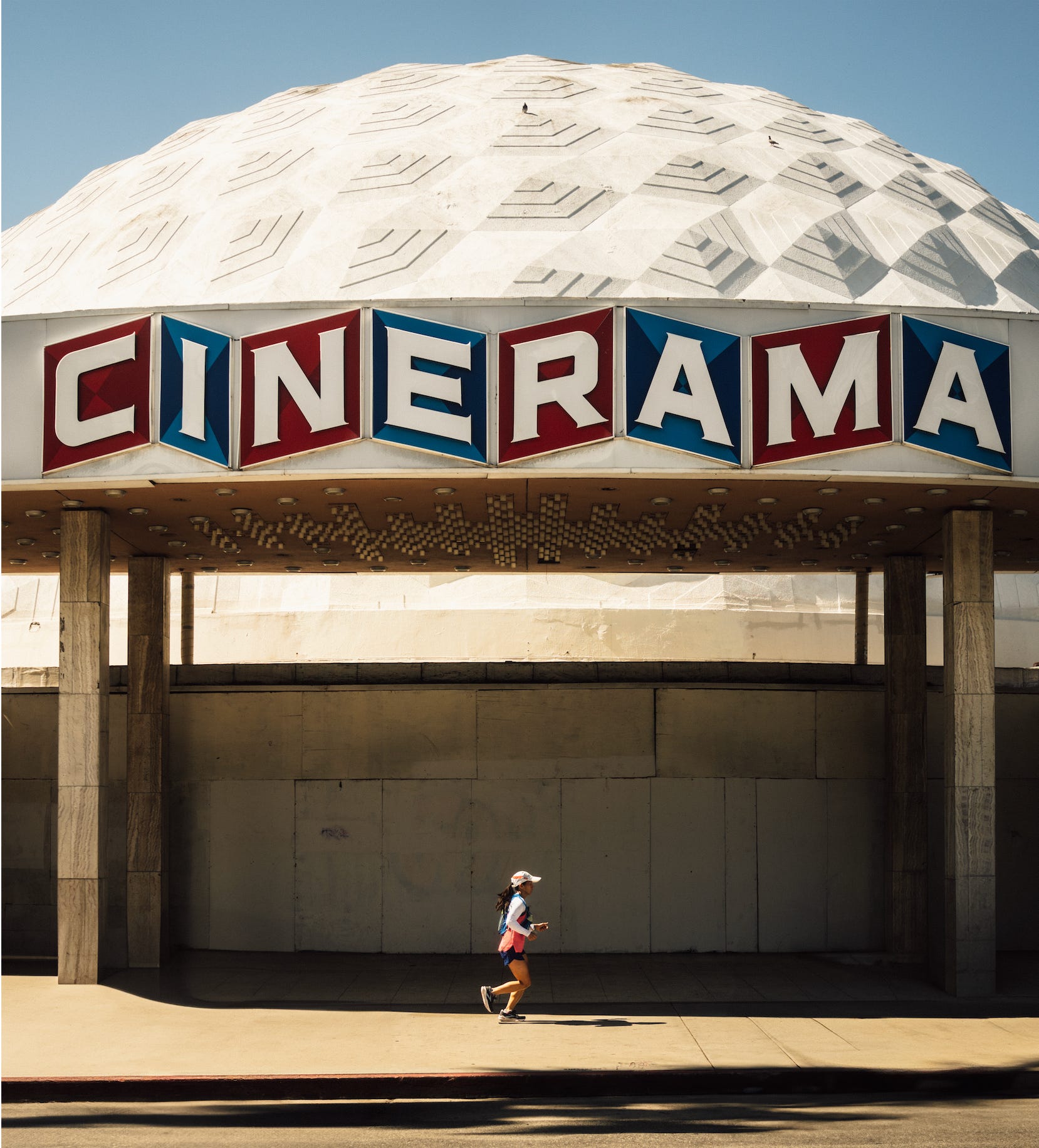
The Forman family, who owns the Cinerama Dome, is going to war with the Save Your Cinema guy. This the kind of LA character who is keeping this city from totally falling apart.
DTLA is desperate for a comeback. We can disagree about how to make it happen, but renters may be taking the matter into their own hands. Overall vacancy has climbed from 14% in 2019 to 34% and real estate values has plummeted, giving renters like Riot Games and Capital Group the opportunity to buy their own buildings. A Singapore-based company is looking to offload the TCW building to its tenant, the LA Department of Water and Power.
A crucial LA-to-SF flight route has returned to Burbank airport. Just make sure to get there early while they make improvements. (But how can you improve upon perfection? Leave Flavortown alone.)
Meet the “First Lady” of lowriding: Watts Native Tina Blankenship-Early “was the first woman member of her car club, Super Natural Lowriders, and the first to be named “Woman of the Year” for Lowrider Magazine in 2023.”
This 81-year-old Dodgers super fan is upset the team is going digital-only with their ticketing system. He doesn’t have a smart phone and doesn’t know how to use a computer.
The grandson of a burglar who orchestrated one of LA’s biggest jewelry heists in 1961 sits down with the victim who discovered the crime. If this hasn’t been optioned already, it’s only a matter of time.
Are you a film-loving parent? This year, caregivers heading to the Los Angeles Festival of Movies will be able to access childcare thanks to Alexa Coblentz and Jessica Kivnik, Founders and Directors of Cinecamp.” My friend Kiva Reardon interviewed the founders about their work.
Jean Harlow’s 1932 red-brick mansion in Holmby Hills, which features a Prohibition-era speakeasy, is for sale for the first time since 1979. It looks so well-preserved—but don’t worry, some tasteless flipper will gut that beautiful all-wood kitchen in no time.
“What’s the most LA movie ever?” There’s a fun watch list in the comments.

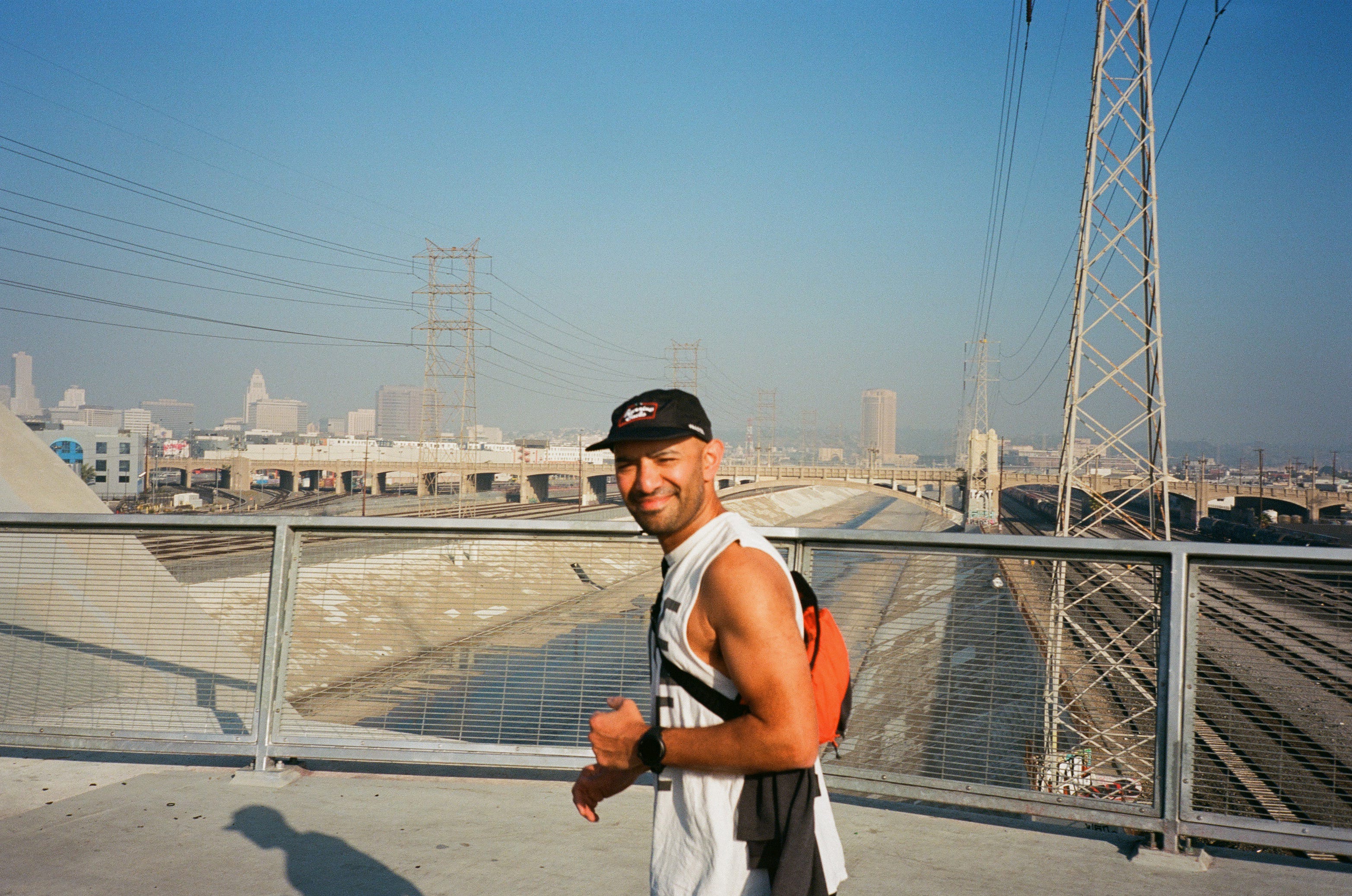
So it goes that “nobody walks in LA”, but they’re certainly running in it. Despite the backlash, run clubs are as popular as they were at the height of the pandemic. There are the ICE trackers organizing running patrols There are the celebrity run clubs by Diplo, Gunna, and Travis Barker. Even some restaurant workers are meeting up to run, allegedly trading in post-shift beverages for pre-shift steps.
I’m a walker myself, and pathologically allergic to group activity, but I stay curious about the ways in which people organize themselves in LA—and why some of them choose running to do that. Which is why I wanted to talk to Raziq Rauf, or Raz, an Angeleno, and the author of the Running Sucks newsletter. His new book, This Is Running, is out today in US bookstores. You can ask him your own questions at his free book launch event at Vroman’s tomorrow night. (Tickets here.)
NBD: You moved here from London in 2014 and didn’t love it. Why?
Raziq Rauf: I was in West Hollywood. No soul. I wanted a shitty bar where I could have a 3 PM beer and feel comfortable doing it. Just one, not ten. I couldn’t find that. LA is a lot more corporate than its reputation. The reputation is that nobody works and everyone’s a bohemian dandy. It’s not the truth. You need a lot of money to live here, so you’re either a multi-millionaire creative or you’re a lawyer at something corporate. That’s fine, but the bohemian-dandy myth is a myth.
I’m an East London boy—Redbridge, Hackney—and I studied geography at uni, so I know that unless there’s a coast in the way, the east of any city is the rougher, cheaper, more creative side. That’s where I thrive. So we landed in Los Feliz. Not East LA, I know. That’ll get the comments going.
NBD: You learned the city by running it.
Raziq Rauf: I signed up for every 5K and 10K I could. I know downtown better on foot than I do in a car—you don’t have to pay attention to one-way streets when you’re running. I’ve run down Hollywood Boulevard at 6 AM, past Jumbo’s at 6:30. It felt insane, and it was very much the plan. I wanted to learn this city through running.
The thing nobody tells you about LA is that drivers here are politer than in London. I went back [to London] after Covid, almost got hit on a run, and was like, what the fuck.
My first job was in El Segundo and I was living in Los Feliz. Two-plus hours in the car a day, sometimes three. Eight hours of work plus three hours of driving plus eight hours of sleep—there’s no time for a leisurely stroll. I had to fit runs into lunch hours and weekends. That’s why LA is such a big running city. Or rather, such an active city.
NBD: What did running teach you about LA?
Raziq Rauf: Each neighborhood has its own run club, and each club reflects the character of the neighborhood. There are something like 250 run clubs in this city. Eagle Rock Run Club—I live a stone’s throw from them, they meet at Walt’s, the “homosocial bonding bar.” They’ve all got Sailor Jerry tattoos, dads in spirit—even the young ones. Venice has its vibe—you’ve got to be quite rich to live there, so it’s wealthy guys taking their shirts off to go for a run. The Valley is much more Latino. Pasadena has an old-man vibe. Boyle Heights Bridge Runners are incredible. Keep It Run Hundred [in Inglewood] and Movement Runners [in Playa Vista] are Black-led. Each club is a microcosm of where it’s from. That’s how I do my tourism now—I go run with people and see the neighborhood through them.
NBD: How does the LA heat play into the running culture here?
Raziq Rauf: When the LA Marathon enforced an 18-mile cutoff in March because of heat, the East Coast running internet got mad. It’s not a real marathon. A lot of that shit was coming from outside LA. Sorry to break it to you, but that rule wasn’t brought in for people from LA. People from LA can handle the heat. It’s you on the East Coast who can’t. You’re training in cold weather, and if you’re going to run in 90-degree heat you might die, and we don’t want that. Accept the kindness and shut up.
NBD: You turned 40 and threw a party with about 60 people. A third of them were runners. How has running shaped your social life in LA?
Raziq Rauf: A third were Brits, a third were a friend group I got parachuted into through my wife, and a third were the running people. And honestly, I see the runners more often than anyone else. I’ve known some of them for five-plus years and still don’t have their phone numbers, because I just see them at the run. It reminds me of an old pub where you walk in and go, “Alright, Jimmy, how’s it going?” And then a couple of weeks later, “Where’s Jimmy?” “Oh, Jimmy died.” You had no way of knowing unless you went to the pub. You talk about sport, you talk about your dog. It’s a familiar face in a third place where you don’t have to think about home or work. That’s almost more valuable than a super-close connection.
NBD: You write a lot about run clubs as mental-health infrastructure, especially after the pandemic. During the pandemic, a lot of people joined run clubs to meet people or just to—
Raziq Rauf: —just to feel something. This was, fingers crossed, a once-in-a-lifetime pandemic. Everything collapsed into one place—your home—for months. That’s traumatic. And then when places reopened and you still didn’t have a vaccine, people just wanted human contact. Run clubs were outside, lower risk, cheaper than a bike. In London they had one hour a day to exercise, like prison yard time. Of course people ran.
Here’s what I actually think humans need: two things, community and creativity. If you strip everything away and look at a two-year-old who doesn’t have bills to pay—what do they want to do? Draw a picture and show their friends. That’s it. And running can provide both. There’s a study where they took two groups, asked them how many things you could think to do with a brick, and the group that went for a walk came up with 60% more ideas. Their imaginations went wild. Running is a creative conduit, and run clubs give you the community to share the ideas with afterward. That’s what people mean when they say “it was really good for my mental health.”
NBD: This year, ICE started raiding neighborhoods in LA, and you used the run-club network differently.
Raziq Rauf: The Latino population in my community [are being targeted]. I don’t fucking like that.
The LA run community doesn’t really have a figurehead. New York has New York Road Runners, the NY marathon— these are institutions that unify people. We don’t have that. But I love bringing people together, so if I can do that even a little, I will. I pulled together a small handful of run-club leaders over the LA Marathon weekend to talk about real stuff: What are we seeing? What can we do? I had a guy from Santa Ana and a guy from Sacramento, where things are going down harder. In Santa Ana, there was a small business whose staff was too scared to leave the house—so the business was going to make nothing that day. My guy puts out a shoutout: “Hey, we need to fund this business for the day.” Pulls in five hundred bucks, a grand. Don’t worry about opening today. ICE is in the area. Stay home, stay safe, we’ve got you. To him, that’s a daily thing. But does everyone know you can do that?
The message I wanted to get to the other leaders was: your run club T-shirts are fine, but these are the actual things we can be doing. You already organize hundreds of people a week to go running. Use those people to keep your community safe. Do real mutual aid. People said it was the most impactful cultural event we did all weekend.
NBD: You coach beginners on the side. You train people specifically to not to hate running.
Raziq Rauf: I focus all my stuff on beginners. That’s true in life in general—I want to raise the floor. Remove poverty and everyone gets happier, the strain on public services drops. Same thing with running as public health. If I can get more people running and demystify how to not hate it, that’s good for the world, even just a tiny bit.
Nobody starts with good endurance. I just came back from six months off with a partial Achilles tear and I’m gassed in ten minutes. It pays to be patient. The runners I love talking to most are the ones who are really curious—explorers. Some of them are the batshit trail people, and I love them, but running 300 miles is the one where I’m not even joking when I say, take a taxi. Personally I think anything past a half marathon stops being healthy. Forty-five minutes, three times a week—that’s the sweet spot. That’s really healthy.
NBD: Last question. Favorite neighborhood to run in?
Raziq Rauf: The beach. The Strand, in the morning. I can’t afford to live there. Nobody can.

TONIGHT: Mayoral candidate Nithya Raman is hosting a meet and greet at El Prado wine bar April 7 from 6 to 8 PM. If you’ve been curious about her platform, here’s your chance to ask her in-person.
TOMORROW: Ronnie’s New Idea, an experimental ventriloquist show by Sophie Becker at the New Theatre Hollywood, is so popular it’s getting extended to June. You can get on waitlist for tomorrow’s show or buy tickets for June here.
TOMORROW: Meanwhile, Mayoral candidate Rae Huang is appealing to the D&Ders with a “Live Fantasy Adventure Game” at Dynasty Typewriter called Roll for Democracy with Twitch star Will Neff. Online tickets are sold out but there will be some left at the door.
THURSDAY: If you miss Jeremy Sole and Travis Holcombe on KCRW, you can catch them at the Moroccan Lounge for Le Frique Sonique on April 9. Tickets here.
Y'all actually have me considering taking a run for the first time in god knows how long
Running is so bad for your body but so good for your mental health.