

Inside Hollywood's quiet retaliation machine
I talked to labor reporter Alex Press about blacklists in Hollywood.
It’s election day. If you’ve never voted in a local election before, I hope you make this your first time. I used the DSA-LA voter guide to fill out my ballot but there are plenty of voter guides out there. We’re already seeing signs of high voter turnout this season! (And Spencer Pratt is already claiming a “tsunami” of votes in his favor. Can’t wait!)
There are a lot of election night parties tonight, including DSA’s. (If you liked the DJs at the No Bad Days party, one of them will be there.) I, however, am having a few friends for over an election night lasagna. All traditions must start somewhere.
LATER THIS WEEK: We talk to Mary H.K. Choi about her new book POOL HOUSE and her favorite places in LA.
Reach out to me at nobaddaysinla@proton.me with tips, feedback, and more.

Astrologer Stevie Goldstein broke down the astrological charts of all mayoral the candidates. Being in Cancer season, there’s a lot of Lunar energy going around for election day. “Nithya, being the only candidate with dominant Cancer placements, looks to fare well from this planetary boost on June 2,” says Stevie.
Gia Kelliher went undercover as a California Post reporter to attend infamous Tenants of the Trees Spencer Pratt fundraiser last week. Gia emailed me the link and reported that there were probably fewer than 40 people there. (I haven’t been there in ages, but I remember even on a random Tuesday there used to be at least 50 or so people packed into that bar.) “Funny mix of people and a significantly smaller crowd that I expected. 60:30:10 balance of pleather jacket tech babble grifters : horny opportunists : emotionally fragile but very earnest animal rights advocates with poor media literacy.” You can read her full recap here.
Gubernatorial candidate (and lefty billionaire??????) Tom Steyer was out ‘n about in WeHo last night for the first day of Pride Month. It seems like he has the support of WeHo mayor Chelsea Lee Byers.
Hundreds of goats will be unleashed on Malibu’s hillsides to help with wildfire prevention. They are tasked with consuming roughly 70 acres of invasive vegetation.
Dudley Market’s managers have been ordered to pay more than $100,000 in penalties for lying to customers about its sustainably caught seafood. Violations include: “unlawful purchase and sale of sport-caught fish like bluefin tuna, commercial fishing without proper licenses, illegal harvesting of rockfish in marine protected areas, and failure to properly document federally managed species brought to shore,” according to SF Gate.
My mom used to take me out of school to accompany her to Santee Alley aka DTLA’s fashion district for a shopping day. (The best days to shop there are weekdays.) I recently went back, and found it to be less busy than I remember, as well as more expensive. NBD writer Elizabeth Moss sent me a story she published in the Guardian about how that part of town is being affected by ICE raids and post-Covid problems. Did you know that 83% of clothing cut and sewn in the United States is made in LA’s fashion district? I find that shocking!
Starting Thursday, My Two Cents founder and chef Alisa Reynolds will be hosting a pop-up dinner series at Sincerely, Yours. If you miss Chef Alisa’s mac ‘n cheese eggrolls, you can book a spot at the 5-course dinner on Resy. The soul food restaurant closed last year after 12 years on West Pico.
ON GOOD AUTHORITY: Gancia’s Craft Kitchen
This is a new series of random little recommendations around LA—restaurants, events, places, people, things! You can submit your own: email me at nobaddaysinla@proton.me with ON GOOD AUTHORITY in the subject line.
I ran into Tosten a couple of weeks ago on his way back from Gancia’s Craft Kitchen, a MEKHO home restaurant in El Sereno, and he was still visibly awestruck by the breakfast burrito he had there. A week later, I followed him there to taste it for myself.

Gancia’s Craft Kitchen is founded by two married chefs who are alums at iconic LA restaurants. Jason was the executive chef at (the recently closed down) Cole’s French Dip and Gina was the pastry chef at the Nickel Diner. Longtime angelenos may remember that the Nickel Diner existed on Main Street for 15 years before it closed in 2023. Real historians can correct me, but Nickel Diner was the first place I saw gourmet pop-tarts in Los Angeles, as well as gourmet donuts. Jonathan Gold and Guy Fieri were fans.
Both Jason and Gina were affected by the post-COVID restaurant slump. Then Gina’s dad got sick, and she had to devote herself to his full-time care. Now she gets to do that while still doing what she loves: making really decadent breakfast foods that she serves to customers in her literal backyard. And if you go on a good day, you may even get to try one of her iconic pop-tarts.
Address: 3114 Lowell Ave, Los Angeles, CA 90032
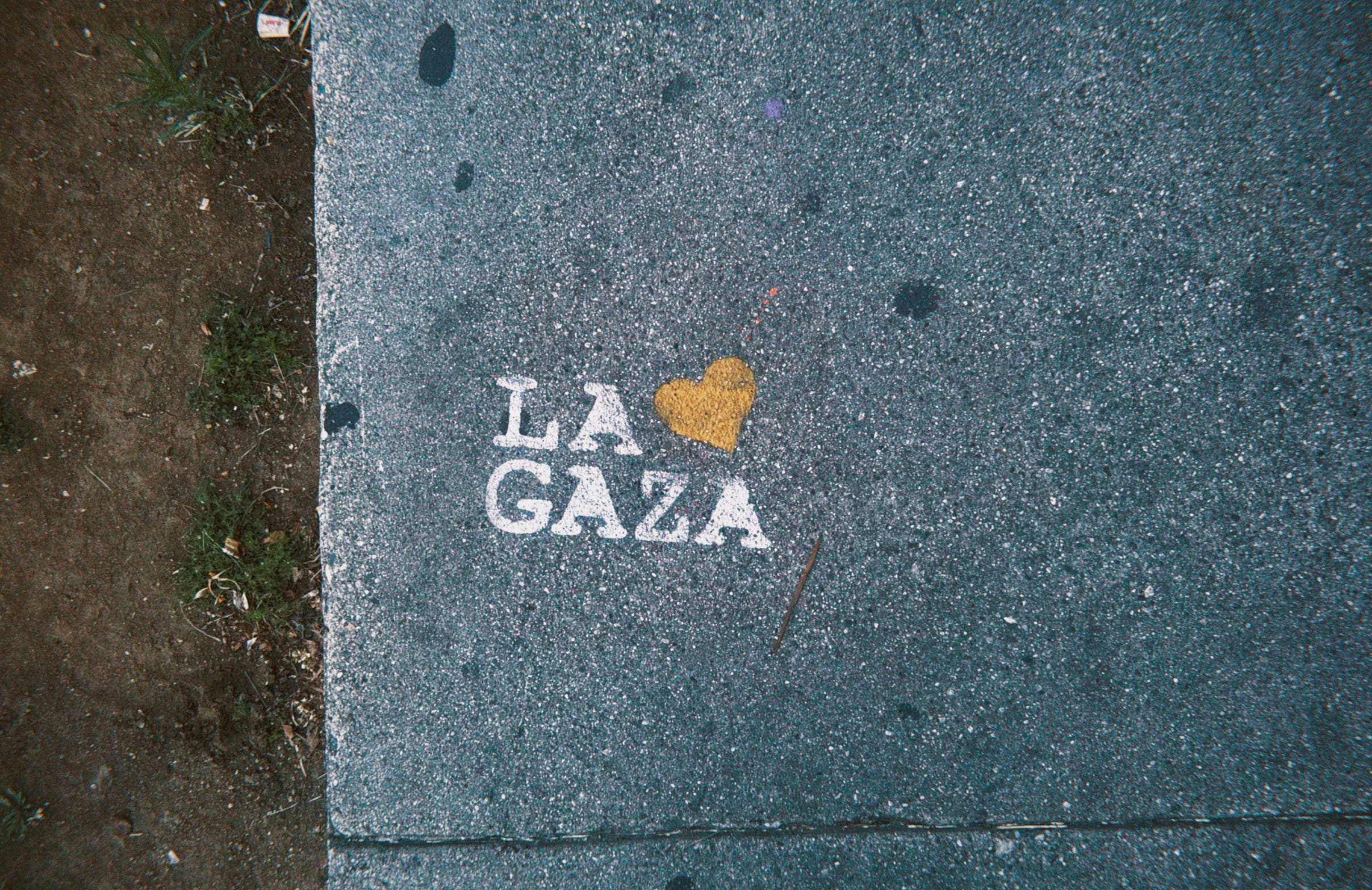
”There’s nothing left to lose.”
Last week, I published an interview with I Love Boosters star Poppy Liu in which she spoke candidly about losing roles for speaking out about the genocide in Gaza. But Poppy is far from being the only person in Hollywood who’s suffered consequences for pro-Palestine speech. For The Key Magazine, Labor reporter Alex Press spoke to more than a dozen people, including The Gilded Age’s Morgan Spector and The Crown’s Khaled Abdalla, about what Hollywood looks like post-October 7.
Press documents clear instances of political reprisals, censorship, and general hostility toward industry workers who’ve made their views on the genocide public. (Most famously, Maha Dakhil’s case.) Amid sharp declines in production in Hollywood, how do film and TV workers distinguish between what’s happening in the market and what’s happening in backdoor conversations about which artists wore a ceasefire pin to the red carpet? I talked to Alex about what she found in her reporting—and what we can take away.
Tell me a little about yourself and your work.
I’m a labor reporter, which is a really endangered species in America. I was on staff at Jacobin for many years, and I’m writing my first book right now—it’ll be with Viking—about the struggle for worker control in America: various strikes, organizing campaigns, and workplace issues people have dealt with across the country. I’m very lucky that my job is basically to go talk to people trying to improve their working conditions, and by extension their own lives and the lives of others. I was in Hollywood during the 2023 strikes, in Detroit covering the UAW, out on Staten Island for the Amazon Labor Union campaign from the beginning. I draw all of that into the book.
What’s been the response to the article so far? Have people been reaching out about more censorship or retaliation?
I’ve heard from a few people—some who I think were dropped from UTA, though I won’t say names because I’m not sure what’s public. Mostly it’s been gratitude that this is still out there. There were people I reached out to who couldn’t speak—some high-profile cases where, even years later, they felt they were still dealing with the repercussions. They wished me luck, and hearing from them matters to me.
There’s a long tail to professional repercussions for political speech. The public might see an article about a Hollywood figure, or hear that a coworker went to a rally and spoke up about Palestine and is suddenly being iced out at work—we see it in passing. But it’s worth keeping at the forefront that these consequences last forever for some people. These are hard-fought careers and jobs that people will never get back. So it’s good to keep on that beat and look at how long-lasting the repercussions really are.
How did you build trust with the people who were afraid to go on the record?
A lot of it is your record. I helped start Writers Against the War on Gaza and have covered Palestine despite being, quote-unquote, a labor journalist—though I think the genocide has massive repercussions for workers, not only in America but of course for Palestinian workers. I’ve spoken with union farmworkers in the West Bank about their issues. There’s only so much you can tell someone to make them feel safe; mostly you encourage people to look at whether you’re out to get them or whether you really just want to understand something that’s hard to report because of the fear. And some of these sources I’ve known a long time—it’s a small world, the creative world of people organizing and speaking up against the genocide.
What surprised you most while reporting?
Part of why I wanted to write this—for Sara Yasin, a wonderful editor—is that I’d read all these Hollywood Reporter-style stories about someone being dropped or speaking out, and none of the coverage acknowledged the basic structural factor underneath it: the film industry is in free fall. As James Schamus says in the piece, there are 40% fewer jobs right now. That backdrop informs every action people across the industry take. If you’re in dark times in your industry—fewer jobs, no one hiring, productions and companies shutting down—you’re less willing to do anything that gives your boss a reason to let you go.
So I went through every conversation asking people whether precarity was shaping what they were willing to do, and whether they saw it in their peers. Everyone said yes, absolutely. No one had been asking them about the fact that speaking up courageously is very different in a booming industry than in one where jobs are being cut everywhere—you’re almost handing someone a bold-faced reason not to hire you.
But here’s what really surprised me: the precarity breaks two ways. I went in expecting people to describe a blacklist, a feeling of I have to be extra good, extra quiet. And there was some of that self-censorship, some swallowing of anger. But for others it broke the other way—a sense that there’s nothing left to lose. When your industry is being destroyed, what reason do you have to stay quiet about something as horrific as a genocide? That sentiment was especially strong among younger workers: I’m not going to get a job anyway, so why am I shutting up about this? That’s been missed in a lot of the coverage. It’s not all silence. There’s also a radicalizing sense you get from watching your industry crumble.
You frame this as a labor story, but unions are structurally designed around documented violations. What would it even look like for a union to protect workers against something that operates entirely through vibes and silence?
Great question—and you’ll have noticed I didn’t get SAG-AFTRA or the WGA on the phone for the piece, despite having covered their fights and having relationships there. I wanted to ask them exactly this, and I was a little surprised they didn’t use the opportunity to talk through any of it.
So part of my answer is: I don’t know. Plenty of industries have protections against unjust dismissal—that’s standard in union contracts—and some protections around free speech. But because everything is freelance now, and so vibes-based, and Hollywood is all about who you know, there isn’t necessarily a lot a union can do. That said, there are things in the piece they could have done. The actor in the SAG-AFTRA MENA committee leadership just wanted to discuss with union leadership why, if they were putting out statements about October 7, they weren’t mentioning anything that had happened since. Even on the level of symbolic statements, there were things a union could have done that they didn’t.
There are things you just don’t want to allow anymore, repercussions or not. You step into the uncertainty and act in a way you’d be proud of. That’s all you can do.
But a labor story doesn’t just mean unions. I cover working-class people and the issues that spill out from their jobs. Workers, unionized or not, can have each other’s backs and navigate around the freelance, informal nature of film work in a way that fills the cracks—because this particular issue is so hard to grieve or protect against under a union contract. We’ve seen rank-and-file networks protecting one another and being a resource. That’s partly what WAWOG is: some of us are in unions, some aren’t, but you need organizational structures that fit the nature of the issue. And this issue is so amorphous that it’s hard to fit into the American labor-law system of what a union contract is.
For me, understanding Palestine in the United States as a labor issue comes down to this: if a worker who speaks out about the genocide can be fired, retaliated against, or disciplined, that’s bad news for everyone. If an employer gets away with it, they’ll be able to do it to someone else for any other reason later. It’s especially true in traditional unionized industries—if a contract can be violated to fire or censor someone, that negates the strength of the contract, because they can do it to you for a different reason the next day. The contract isn’t worth the paper it’s written on. We’ve seen workers in the organized labor movement pointing this out. I want to bring these two movements together—to translate the issues of each to the other. That’s something I’ve been trying to do for a few years.
How did you navigate the ambiguity of whether something is political retaliation or just the market—when 40% of production has vanished and jobs are already scarce?
It’s funny—when Sara and I first talked about this piece, I basically said, we’re proposing to write about something that can’t be proven, so let’s see how that goes. In some cases it’s obvious; sometimes the big shots are dumb enough to make it obvious—think Melissa Barrera. But often they aren’t. This is true for labor violations across every industry: as long as the employer doesn’t tell you it’s for the illegal reason, they can get away with almost anything.
So what people kept describing to me was complete paranoia—the inability to pin anything down. Morgan Spector says this early in the piece: he’s in LA for an industry event, looking around thinking, am I not going to get a job because of what I’ve done? And his friends say, no, none of us can get jobs—because there are no jobs. There’s no line you can see, and it keeps shifting as the industry contracts.
To be fair, this is true across industries. Think of an Amazon worker organizing a union who gets fired for being one minute late—technically they messed up, but they know it’s retaliation. You never know, and you have to live with that uncertainty. A lot of people in the piece land on the idea that they might as well be able to sleep at night—might as well do the right thing, since you’ll never know anyway. Whether it’s speaking up, or not working with someone—one Palestinian producer told me about a colleague openly talking about doing IDF fundraisers in a Zoom meeting she was on. There are things you just don’t want to allow anymore, repercussions or not. You step into the uncertainty and act in a way you’d be proud of. That’s all you can do. And at the height of the last Hollywood blacklist, people learned the same thing: you’re never quite sure, and you have to live with it.
Morgan Spector calls Palestine a kind of skeleton key for understanding how power operates. Does that framework make sense to you?
It does, and it’s interesting. Living in what’s still in many ways an industry town, even a shrinking one, it’s genuinely hard to map how anything in the film industry works. I write a lot about IATSE, and by the time someone can explain the specifics of a production to me, it’s already wrapped—things move so fast that even after years of covering film-industry labor, I often find myself confused about how anything works.
People might want to shut you out, and might even succeed, but a lot of people agree with you. You do your opponent’s work for them when you decide they’re right and that you’re the one who has to shut up.
But talking with Morgan, it seemed like even the small cases that rose to the surface as obvious retaliation let you start mapping how decisions get made and how power functions. You see people getting dropped from UTA or CAA; you see a production assistant on Instagram who’s no longer getting jobs with a particular company; you see film executives’ names attached to an industry committee operating out of the ADL. If you draw a map of the incidents as they happen, you find that even in an industry this informal and networked and freelance, there are still gatekeepers, still places where exclusion happens. And because Zionists are so ideologically committed to retaliating where they can, they reveal themselves—here’s the wall you have to break through. So skeleton key is a great metaphor: you start by looking at retaliation and end up understanding the structure of the industry. That’s why I kept the quote.
Is there anything we didn’t talk about that you’d like to mention?
This atmosphere cuts two ways—people staying quiet to stay employable, and people sensing there’s nothing left to lose. The takeaway of the article transformed over time, from what I thought would be a straightforward blacklist story into one about people deciding, fuck it, I have nothing left to lose.
There’s a quote from Boots Riley in the piece that matters to me. Whether we’re talking about bosses or Zionists or whoever—the one way they get you is by making you feel you’re the only one with this opinion. They make you believe you’re alone. Khalid Abdalla says that when he walked the red carpet with “ceasefire now” on his hands in November 2023, he believed he was about to blow up his career—and then you find out that’s not true. People might want to shut you out, and might even succeed, but a lot of people agree with you. You do your opponent’s work for them when you decide they’re right and that you’re the one who has to shut up.
What’s been remarkable since October 7—for me, as someone who’s been in the Palestine solidarity movement since I was a teenager—is realizing that it’s actually the majority. Even in a country actively aiding and abetting a genocide, most people don’t want this. So my one takeaway, which I say to other reporters, especially at places like the New York Times: yes, it’s scary to face retaliation, but you’ll be entering a movement of incredibly talented, smart, competent people who have your back—and it’s much bigger than you can see from the outside.
And I feel obligated to say, stepping back, that it always feels a little ridiculous to write about retaliation against workers in the United States compared to what a Palestinian reporter faces right now. Next to my counterparts in Palestine, these are small risks. So keeping perspective matters—and so does knowing you’re joining a movement. It’s work, but it’s not impossible to speak up and oppose a genocide. It’s something you can do, and you’ll have support and networks if you do. The important thing is not to accept that you can’t do anything, that you’ll just be blacklisted. We’re seeing that that might not be the case anymore.
THURSDAY TO SUNDAY: The Philosophical Research Society and TarotArts present the 2026 Festival of Tarot, a weekend of tarot readings, metaphysical panel discussions, and eosteric martetplace, and more. There are weekend passes and individual tickets, but you can also attend some of the weekend’s for free. Get tickets here.
THURSDAY TO MONDAY: Harakat, a festival celebrating cars and car culture in the Middle East, is coming back to LA. Even a car hater like myself may find something to enjoy at this event—there will also be chai, desserts, local vendors, art, and a specially curated selection of cars. Get tickets here.
SATURDAY: In The Valley With Josh Heller is celebrating its one year anniversary at Deadly Wax in Granada Hills. Josh will be DJing, with an afterparty to follow! I’ll be there; come say hi.
Get the chile verde and learn more about Gancia's story here: https://substack.com/home/post/p-199928190